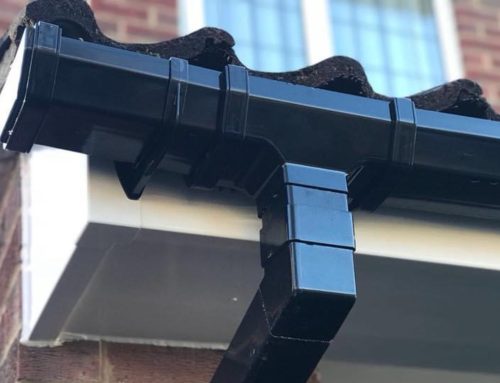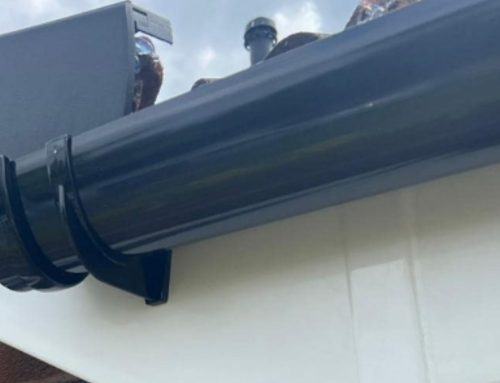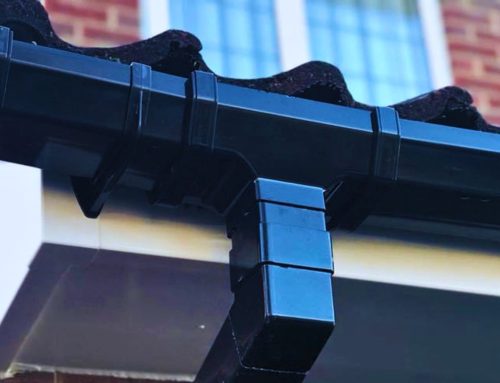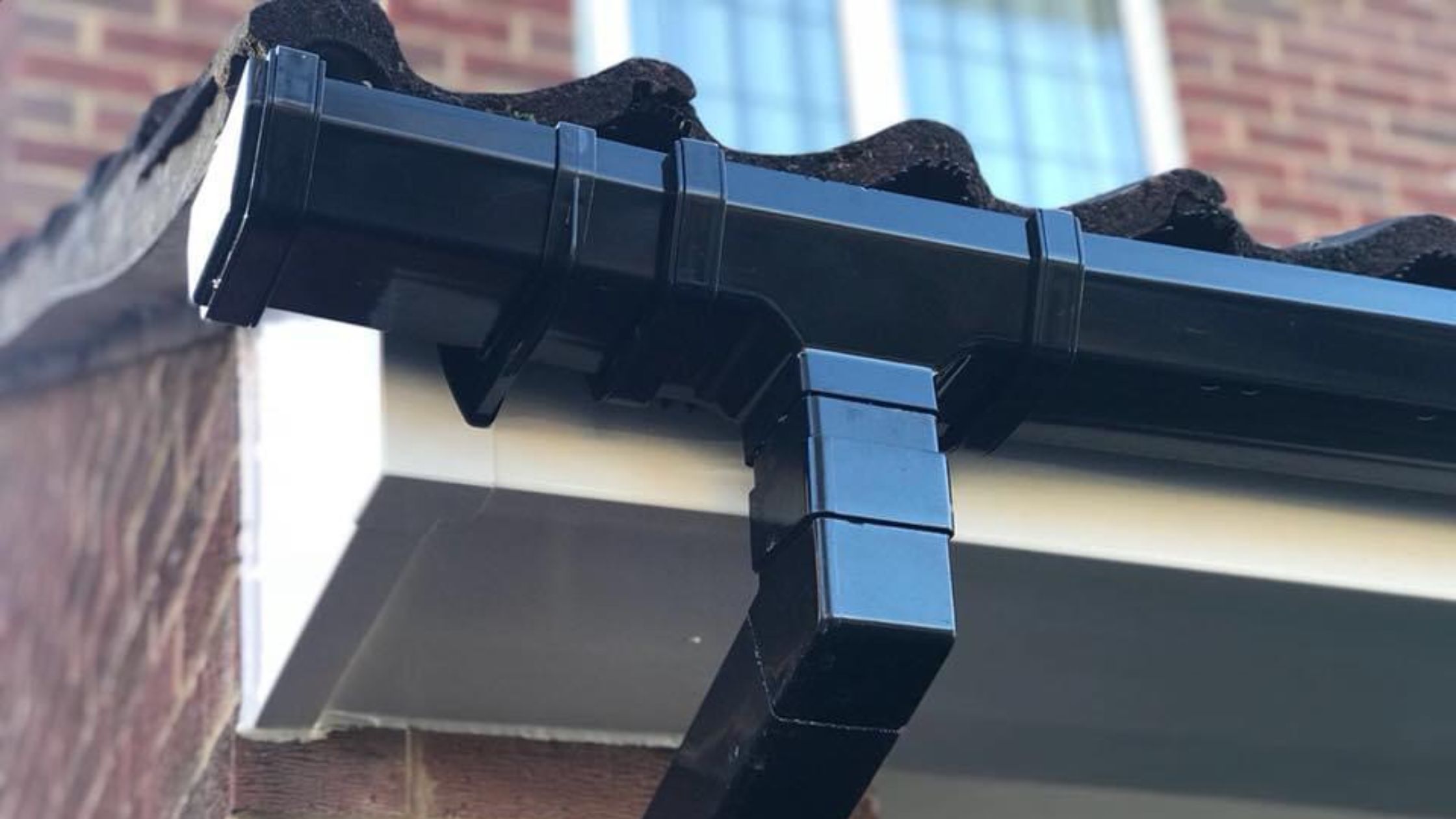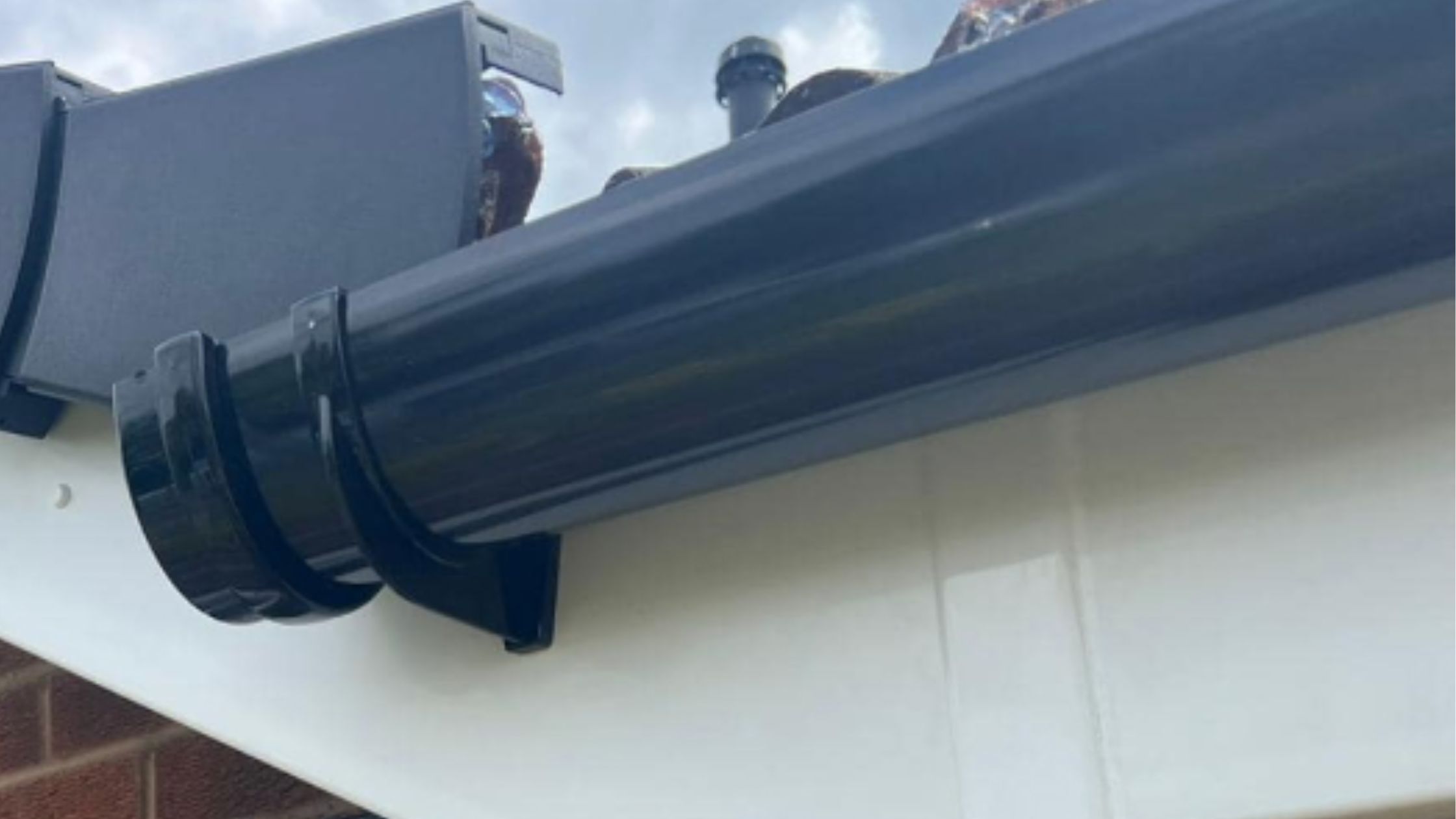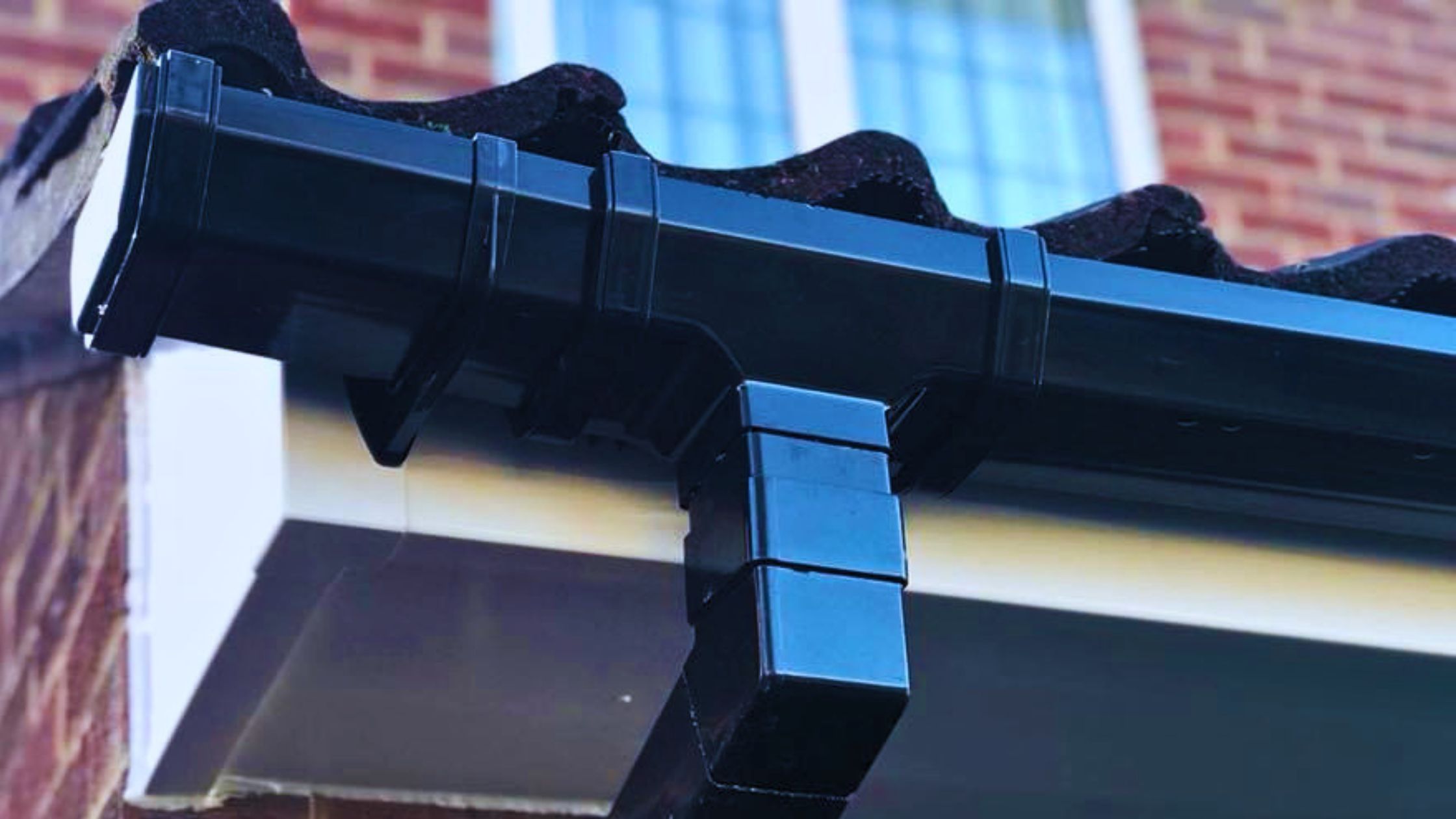
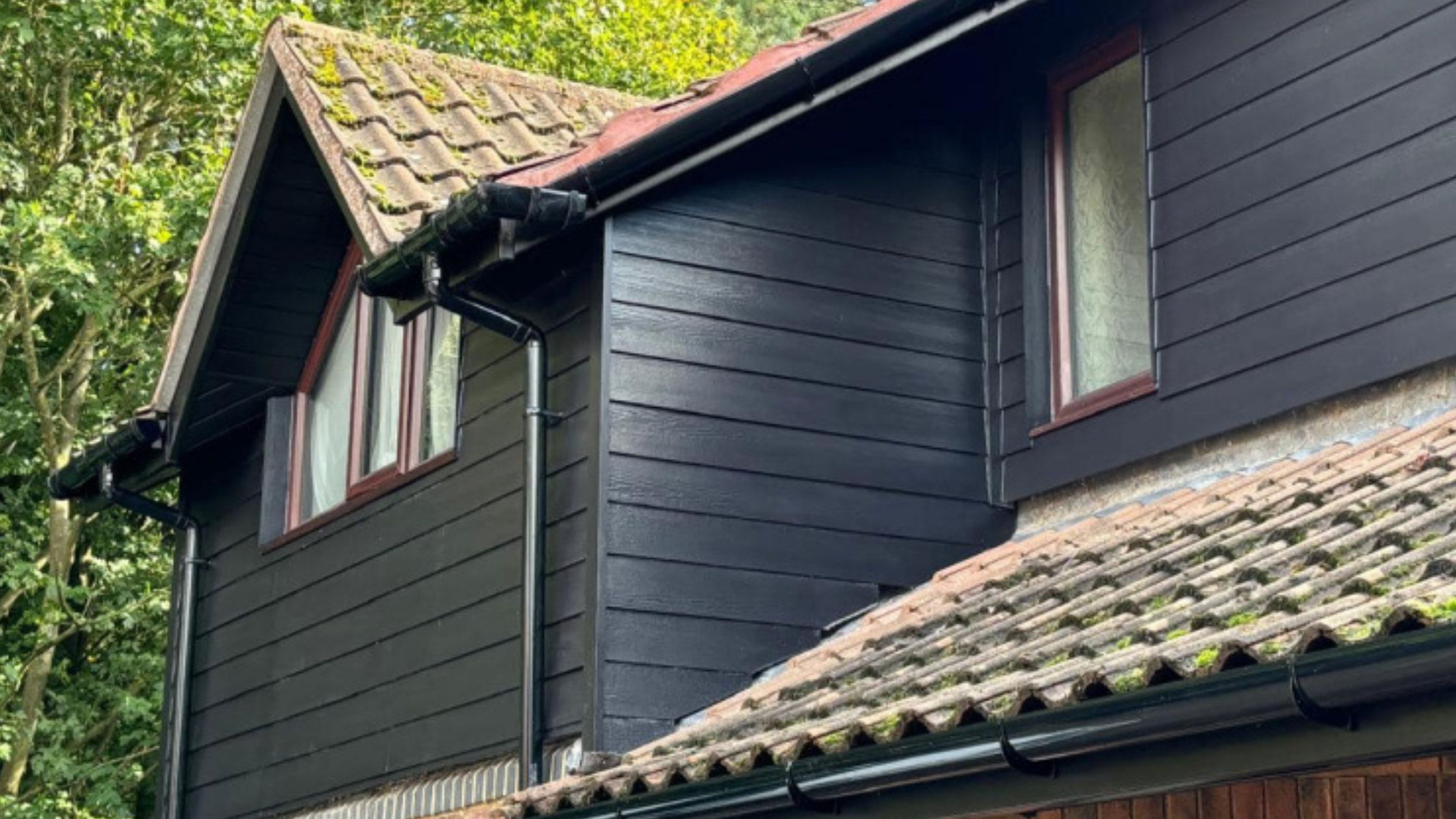
Gutter fittings are the individual components, stopends, brackets, angles, outlets, and downpipe parts that hold a guttering system together and direct water safely off your roof. The gutter trough itself only does half the job; it’s the guttering pipes and fittings around it that make the whole system watertight and effective.
If you’ve ever looked at a guttering quote or product list and wondered what half the terms actually mean, this guide breaks down each fitting and what it’s for.
What is a Gutter Fitting?
A guttering system is really two connected parts working together. The gutter itself is the horizontal trough fixed along your roofline that catches rainwater. From there, a series of fittings connects the gutter to a downpipe, which carries the water down the side of your property and away into a drain.
Everything that isn’t the gutter length or the downpipe length, brackets, corners, joints, and connectors, falls under the umbrella of “fittings.” A typical residential property needs somewhere between 30 and 80 metres of guttering, so even a modest roofline can involve a surprising number of individual fittings working together.
What Fittings Support the Guttering Itself?
The gutter trough can’t do its job alone. These are the fittings that hold it in place and keep water moving in the right direction:
What Fittings Make Up the Downpipe System?
Once water reaches the outlet, a different set of fittings takes over to guide it safely down and away from the property.
Offset Bends
Offset bends are angled sections of pipe used where the downpipe needs to step out or in, for example around an overhanging fascia. Two bends fitted together create what’s known as a swan neck.
Pipe Sockets
Pipe sockets join two lengths of downpipe together, typically with a simple push fit connection. Some include an integrated bracket so the joint can be screwed directly into the wall for extra support.
Pipe Clips
Pipe clips secure the downpipe to the wall at regular intervals, preventing it from moving in the wind or under the weight of water.
Pipe Branches
Pipe branches connect two downpipes into a single drop, useful when water from more than one section of roof needs to reach the same drain.
Shoes
A shoe fits at the base of the downpipe to direct water away from the wall and into a drain or gully, protecting your foundations from water pooling too close to the property.
Hopper Heads
Hopper heads sit at the top of a downpipe and allow a separate waste pipe to empty into the system. They’re mostly found on older properties and are rarely used in new installations.
Common Gutter Fittings at a Glance
Working through a few key factors will help narrow down the right combination of profile and material for your property.
| Fitting | Part of System | What It Does |
|---|---|---|
| Stopend | Gutter | Caps off the open end of a gutter run |
| Gutter angle | Gutter | Changes the gutter’s direction around corners |
| Gutter union | Gutter | Joins two gutter lengths together |
| Fascia bracket | Gutter | Fixes and supports the gutter along the fascia |
| Outlet | Gutter to downpipe | Connects the gutter to the downpipe |
| Offset bend | Downpipe | Steps the downpipe in or out from the wall |
| Pipe socket | Downpipe | Joins two downpipe lengths together |
| Pipe clip | Downpipe | Secures the downpipe to the wall |
| Pipe branch | Downpipe | Merges two downpipes into one drop |
| Shoe | Downpipe | Directs water away from the wall at ground level |
Why Do Gutter and Downpipe Sizes Differ?
It often catches people out that a gutter and its matching downpipe aren’t the same width. A standard 112mm half round gutter, for example, typically connects to a 68mm downpipe rather than a matching 112mm one. This is because water flows away faster vertically than it does horizontally, so the downpipe doesn’t need to be as wide as the gutter to keep up.
Gutter and outlet sizing isn’t just a manufacturer preference either. Approved Document H of the Building Regulations, which covers rainwater drainage, sets out requirements for gutter and outlet sizes based on roof area and expected rainfall, to make sure water is carried away without overflowing. You can read more about the full requirements on the Planning Portal.
How Much Guttering Does a UK Home Need?
If you’re trying to picture how much guttering your own property might need, it helps to see how this varies by house type. These figures are rough trade estimates rather than an exact formula, but they give a useful starting point.
| Property Type | Typical Guttering Length (approx.) |
|---|---|
| Terraced house | Around 10 to 15m |
| Semi-detached house | Around 20 to 30m |
| Detached house | Around 35 to 50m |
| Bungalow | Around 30 to 40m |
Every building has its own quirks. Extensions, bay windows, dormers, flat-roof sections, and multiple downpipe drops can all add to the total, and two homes of the same type can end up needing quite different amounts of guttering. These figures are only meant to give you a general idea. It’s always worth getting a professional out to measure your roofline properly before ordering materials or agreeing a quote.
What Affects How Many Fittings Your Property Needs?
Every property is a little different, and a handful of factors decide how many fittings a guttering system actually needs.
Because of this, no two properties need exactly the same combination of fittings, even if they look similar from the street. The most reliable way to know exactly what your home needs is to have it properly assessed rather than guess.
Frequently Asked Questions

What Guttering Does Homefix Install?
At Homefix, we supply and fit complete uPVC guttering systems, including all the fittings needed to make them watertight, in square, half round, ogee, and deepflow profiles, using trusted brands including SWISH, HomeLine, and Flowplast. Every system is BBA approved and available in black, brown, anthracite grey, and white.
Our fitters measure your roofline precisely before installation, fitting each length with proper falls and secure fixings so water flows correctly to the outlets. Joints are sealed watertight and downpipes are positioned to drain effectively, all backed by a 10 year installation guarantee with no deposit required upfront.