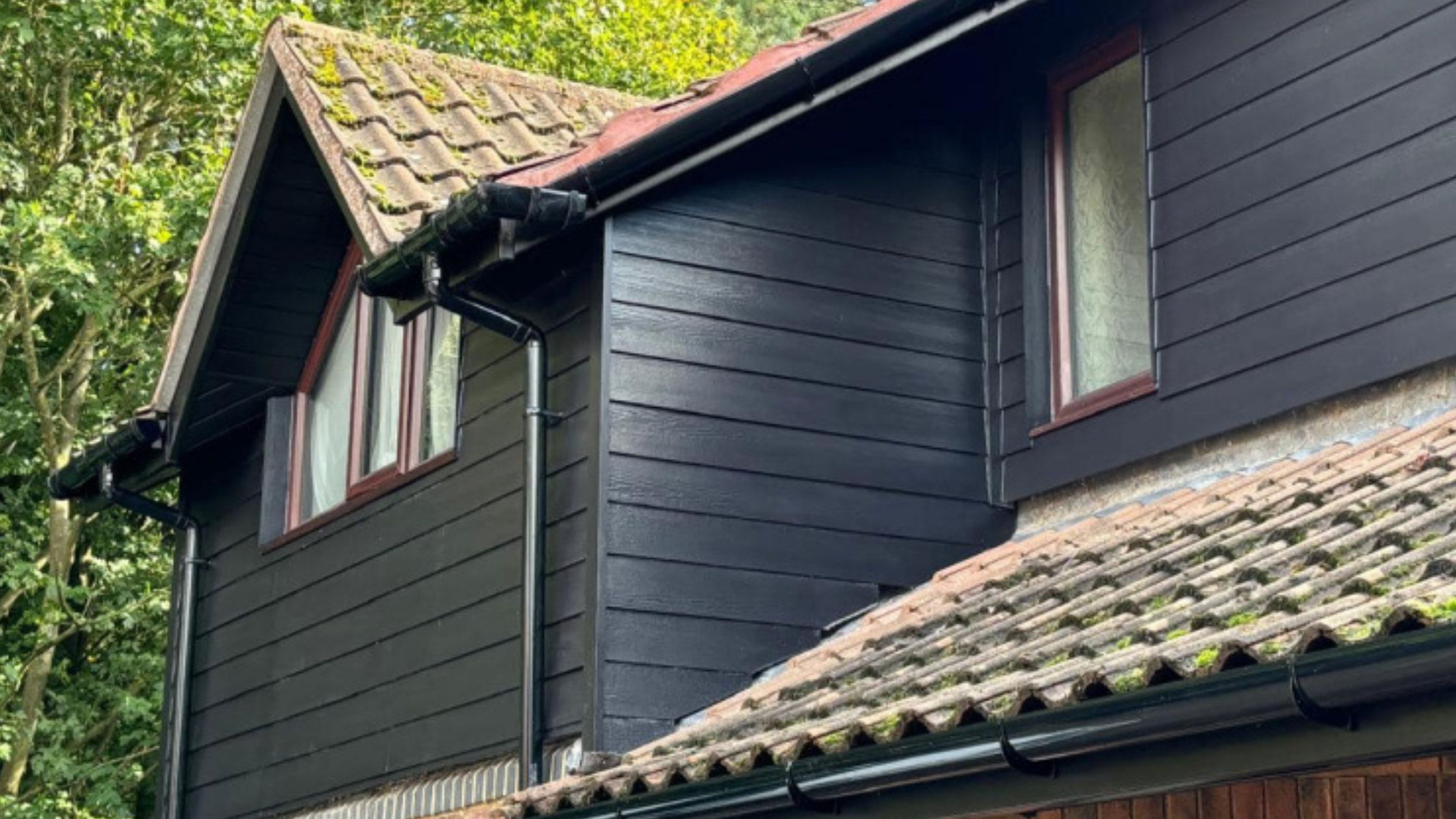
The best guttering for your house is a system sized to carry the water your roof actually sheds, in a profile that suits the style of your property. For most UK homes that means uPVC, in a half round, square, ogee or deepflow profile, chosen to match the roof above it.
There’s no single answer that works for every property, and that’s the part most homeowners find frustrating. This guide explains what actually decides the right choice, so you know what to look for and what questions to ask.
What Makes Guttering Right for a Property?
Guttering has one job: move rainwater off your roof and away from your walls and foundations before it causes damage. A system that’s too small for the roof above it will overflow in heavy rain, no matter how well it’s fitted.
So the decision comes down to three things working together. Capacity, which is driven by your roof. Durability, which is driven by the material. Appearance, which is driven by your property’s style. Get all three right and the system does its job quietly for decades.
Start With Your Roof
Your roof is the single biggest factor. A larger roof sheds more water, and a steeper pitch sends that water into the gutter faster, so both increase the capacity you need.
This is why two houses on the same street can need different systems. A modest bungalow with a shallow pitch has very different demands to a three storey detached house with a steep roof and multiple elevations draining into one run.
Deepflow and square profiles carry more water than standard half round, which is why they’re the usual answer for larger or steeper roofs. Half round tends to suit smaller or simpler rooflines where the volume is lower.
Consider Where You Live
Rainfall varies enormously across the UK, and it matters more than people expect. The Met Office notes that the wettest parts of the country, including Snowdonia, the Lake District and the Scottish Highlands, receive more than four metres of rainfall a year, while the drier southeast sees a fraction of that.
A system that copes perfectly well in Milton Keynes might be undersized in Cumbria. If your property sits somewhere exposed, or you’ve had overflow problems in heavy rain before, that’s a strong signal you need more capacity rather than a like for like replacement.
Match the Look of Your Home
Once capacity is settled, appearance is the next decision. Each profile carries a different character.
Half Round
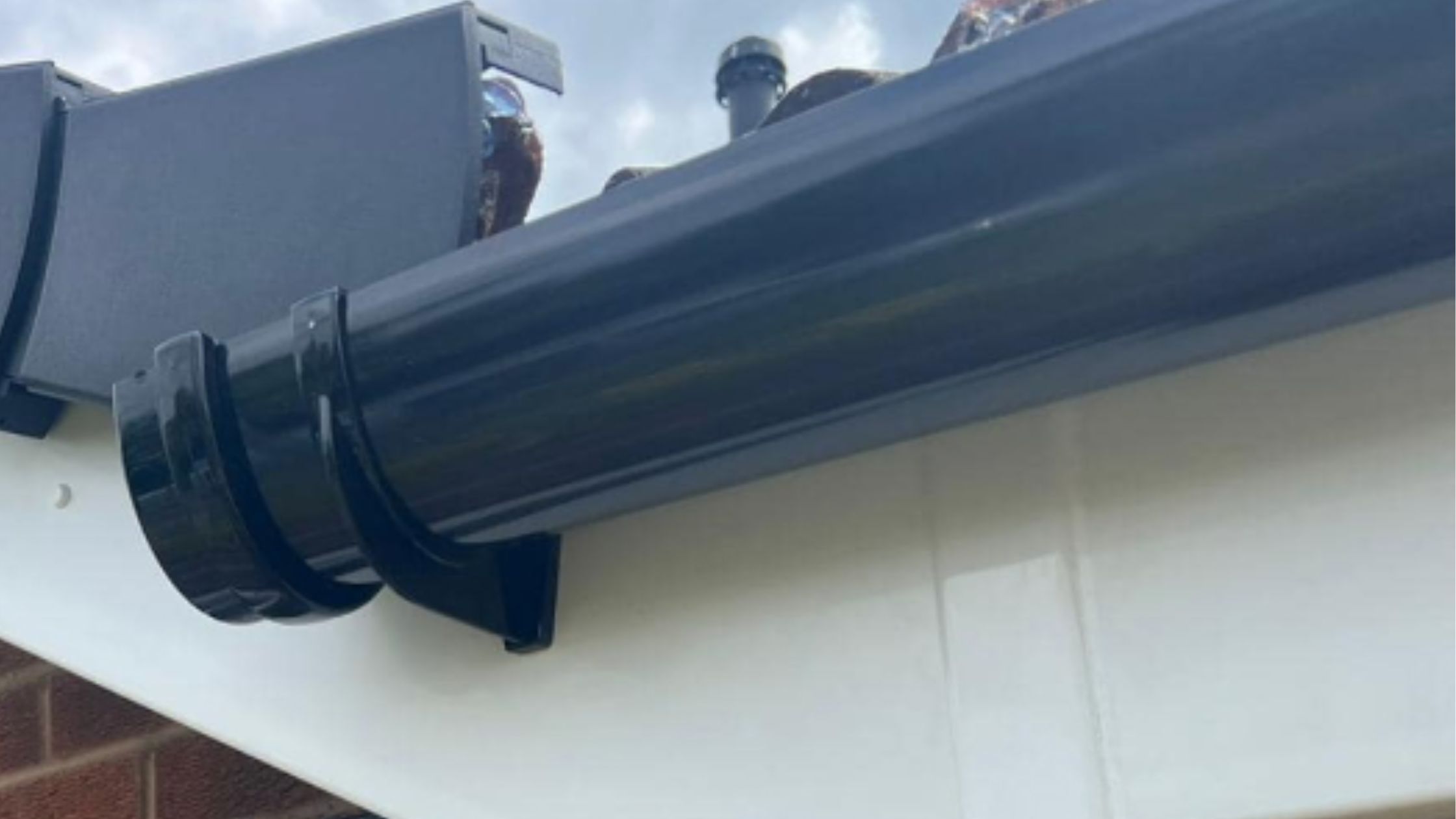
A simple, traditional curve that suits older and period properties. The smooth interior helps water flow steadily and makes it the easiest profile to keep clear of debris.
Square
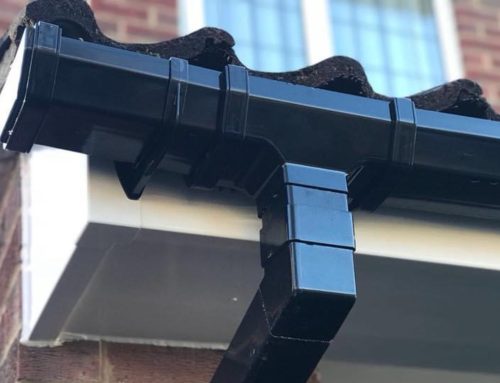
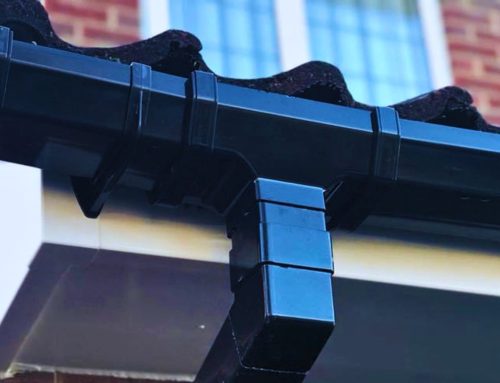
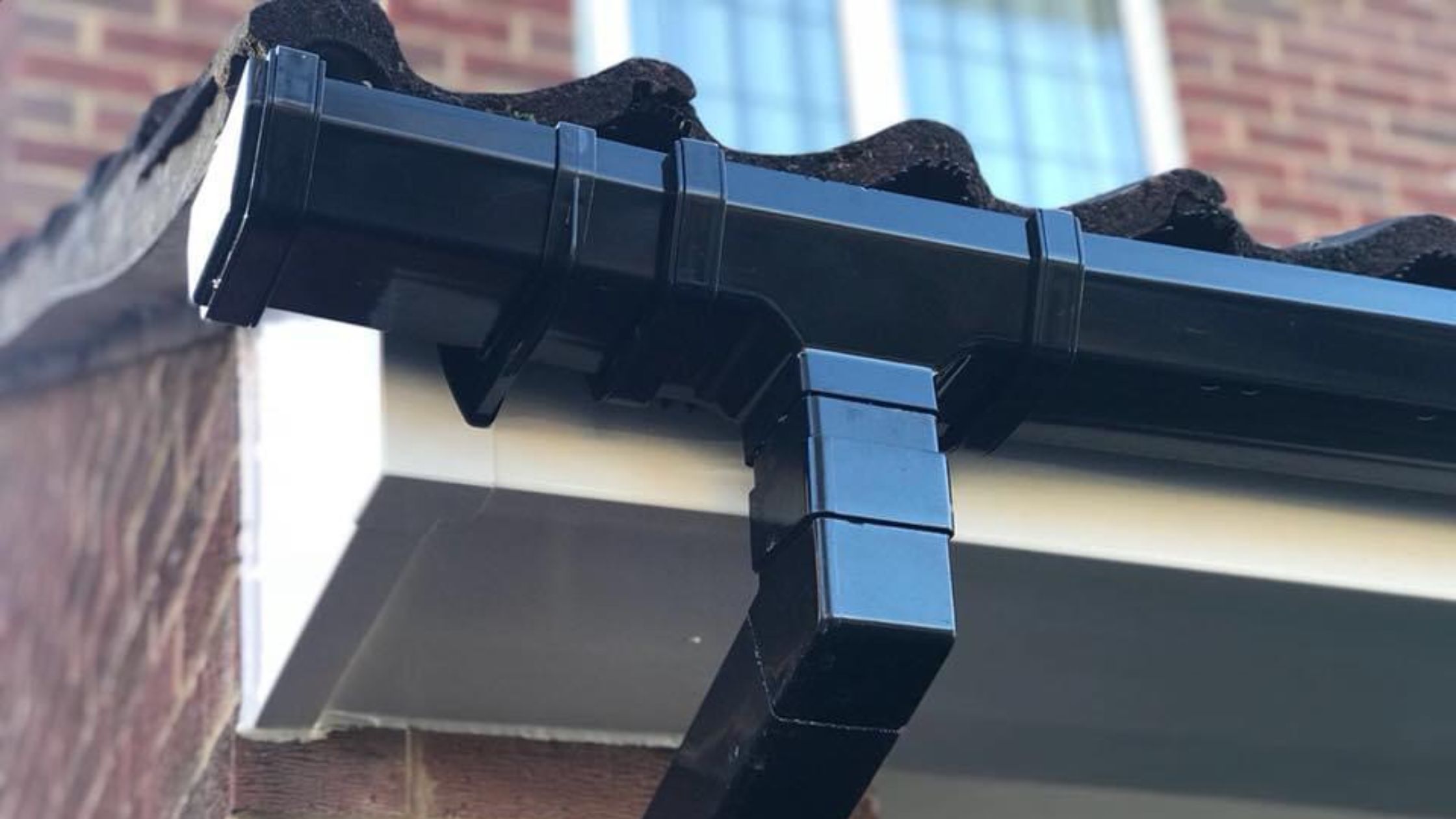
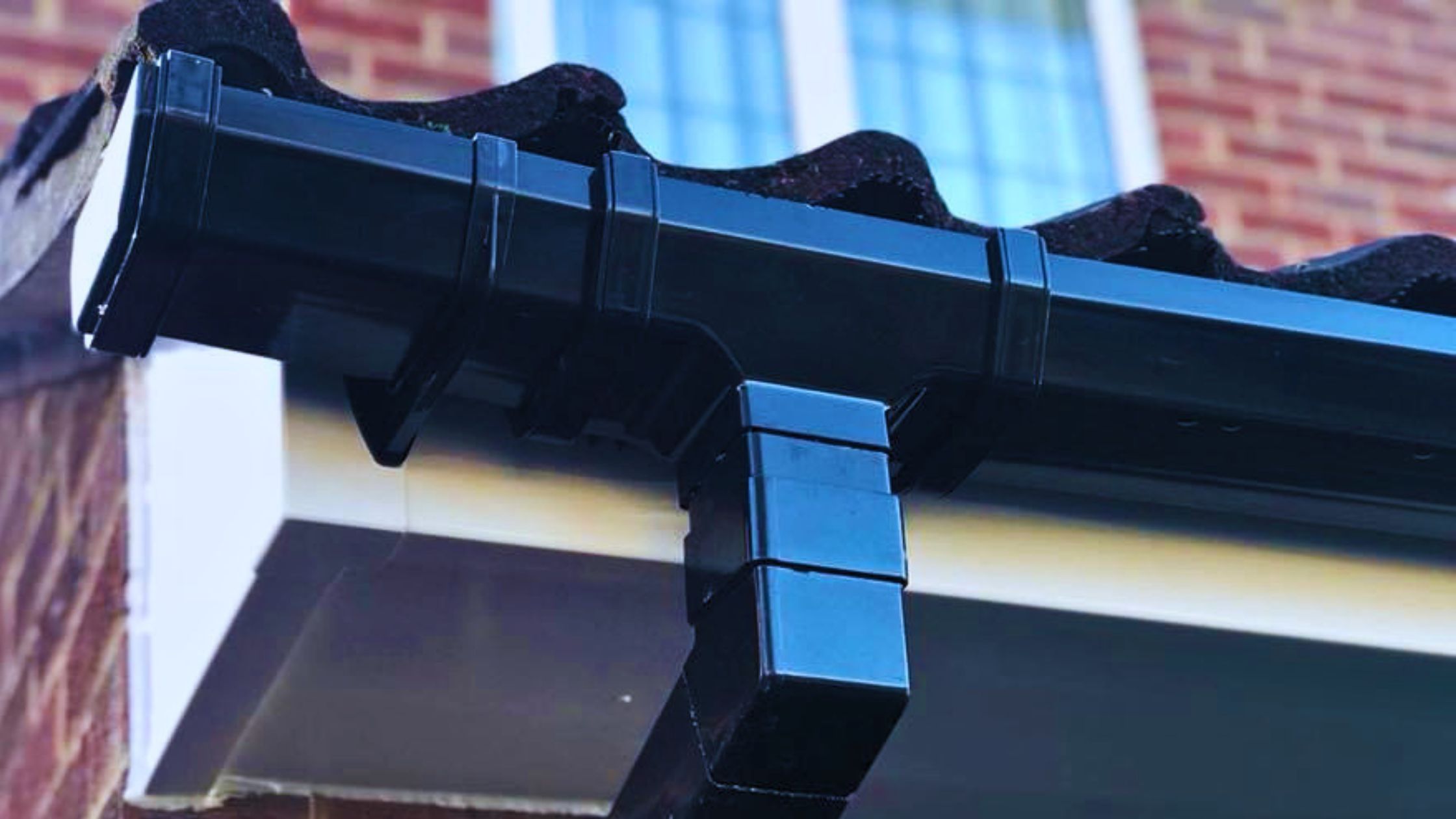
Flat, clean lines that work well on modern builds and extensions. Square profiles generally carry more water than standard half round, making them a practical choice as well as a contemporary one.
Ogee
A decorative moulded front edge, well suited to Victorian and traditional homes. Ogee combines period detailing with solid drainage performance, so you don’t trade capacity for appearance.
Deepflow
Similar in shape to half round but with a deeper channel, so it adds capacity without a dramatic change in appearance. This is the usual answer for larger roofs or properties in wetter parts of the country.
If you want the full breakdown of how each profile performs, our guide to the types of guttering available for UK homes covers each one in detail.
Which Guttering Suits Which Property?
As a rough starting point, here’s how property types and profiles tend to pair up. Treat this as a guide rather than a rule, since roof pitch, extensions and local rainfall all shift the answer.
| Property Type | Commonly Suited Profile | Why |
|---|---|---|
| Terraced house | Half round or square | Smaller roof area, lower volume to carry |
| Semi-detached house | Square or ogee | Moderate roof area, often a mix of elevations |
| Detached house | Square or deepflow | Larger roof area and more water to manage |
| Bungalow | Half round or deepflow | Wide roofline, often shallow pitch |
| Period or Victorian home | Ogee or half round | Profile suits the age and detailing of the property |
| Modern build or extension | Square | Clean lines complement contemporary design |
Why uPVC Suits UK Gutters
uPVC is what we install at Homefix, and it holds up well in British conditions. It resists rust and corrosion, needs no painting or sealing, and asks for little more than a clean twice a year.
It’s also available in every common profile and in a wide range of colours, so you get the practicality without compromising on how your roofline looks. For most UK homes, that combination is hard to beat.
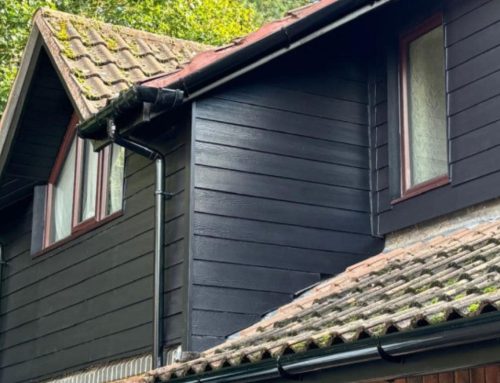
Choosing the Right Colour
Colour is the easiest decision to get wrong, because it’s the one people make last. A few things worth thinking about:
Signs Your Current Guttering Isn’t Up to the Job
If you’re weighing up whether to replace, these are the signs that your existing system isn’t coping:
Overflow in ordinary rainfall is the clearest sign that capacity, rather than condition, is the problem. That usually points to a profile change rather than a straight swap.
Frequently Asked Questions

What Guttering Does Homefix Install?
At Homefix, we supply and fit complete uPVC guttering systems in square, half round, ogee and deepflow profiles, using trusted brands including SWISH, HomeLine and Flowplast. Every system is BBA approved and available in black, brown, anthracite grey and white.
We measure your roofline before installation so the profile matches the water your roof actually sheds, then fit each run with proper falls and secure fixings. We specialise in full replacement rather than patching existing systems, and every installation is backed by a 10 year installation guarantee with no deposit required upfront.